
Increase Plant Productivity
Keep Your Assembly Line Flowing
When one workstation falls behind, the effects can ripple through the entire assembly line.
Work piles up. Operators wait. Bottlenecks develop. Supervisors move people around to keep production moving. And production targets become harder to hit.
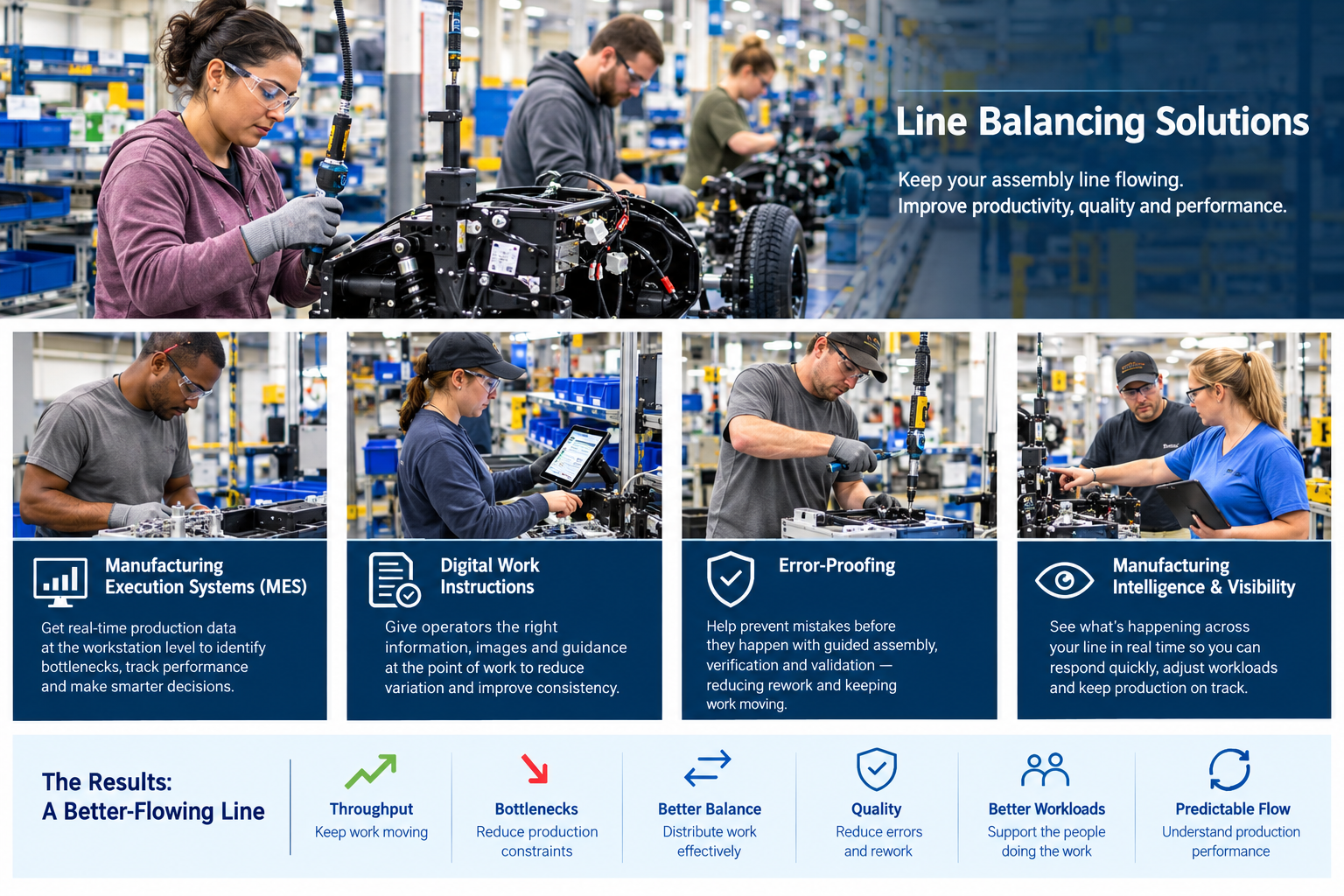
Matrix Automation helps manufacturers balance work across people and stations, so assembly can flow more efficiently, consistently, and predictably.
Our manufacturing solutions provide data, visibility, operator guidance, and process control needed to identify constraints, improve workloads, and continuously optimize the way work moves through your line.
Better Balance, Flow & Plant Performance

Make production more predictable
Achieve Predictable Plant Performance
Effective line balancing means understanding the entire assembly process and finding ways to make the work flow better. Matrix helps manufacturers identify:
- Where bottlenecks are occurring
- Which stations are consistently behind
- Where operators are waiting
- How long tasks actually take
- Where rework is adding time
- How product variations affect cycle time
- Where processes can be improved
- How staffing changes affect production
Matrix Automation's Line Balancing Methodology
Expertise to Balance Complex Production
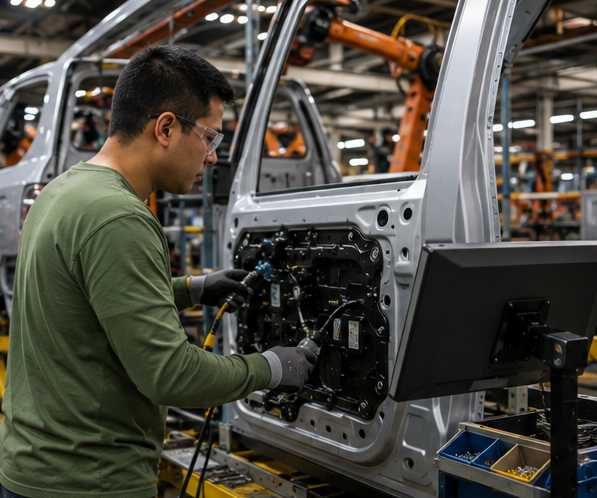
Line Balancing for Human-Centered Assembly: People are at the center of complex assembly. Operators have different levels of experience and skill. Some tasks take longer than others. Product configurations can change the work required at a station. New operators may need additional support. And unexpected quality issues can add work where you least expect it.
Matrix helps manufacturers balance work around the realities of production.
- Actual task times
- Operator skill and experience
- Product mix and variation
- Production demand
- Ergonomics and physical workload
- Quality requirements
- Material availability
- Rework and defects
- Training requirements
- Available staffing
The goal is a sustainable flow of work—not simply a balanced line on paper.